Actinic Keratosis Treatment in London
Actinic keratosis, also called solar keratosis, causes rough scaly patches from long-term sun damage. At Skinhorizon Clinic in Maida Vale, we assess sun-damaged skin carefully, identify suspicious lesions and offer personalised treatment to reduce risk and protect long-term skin health.
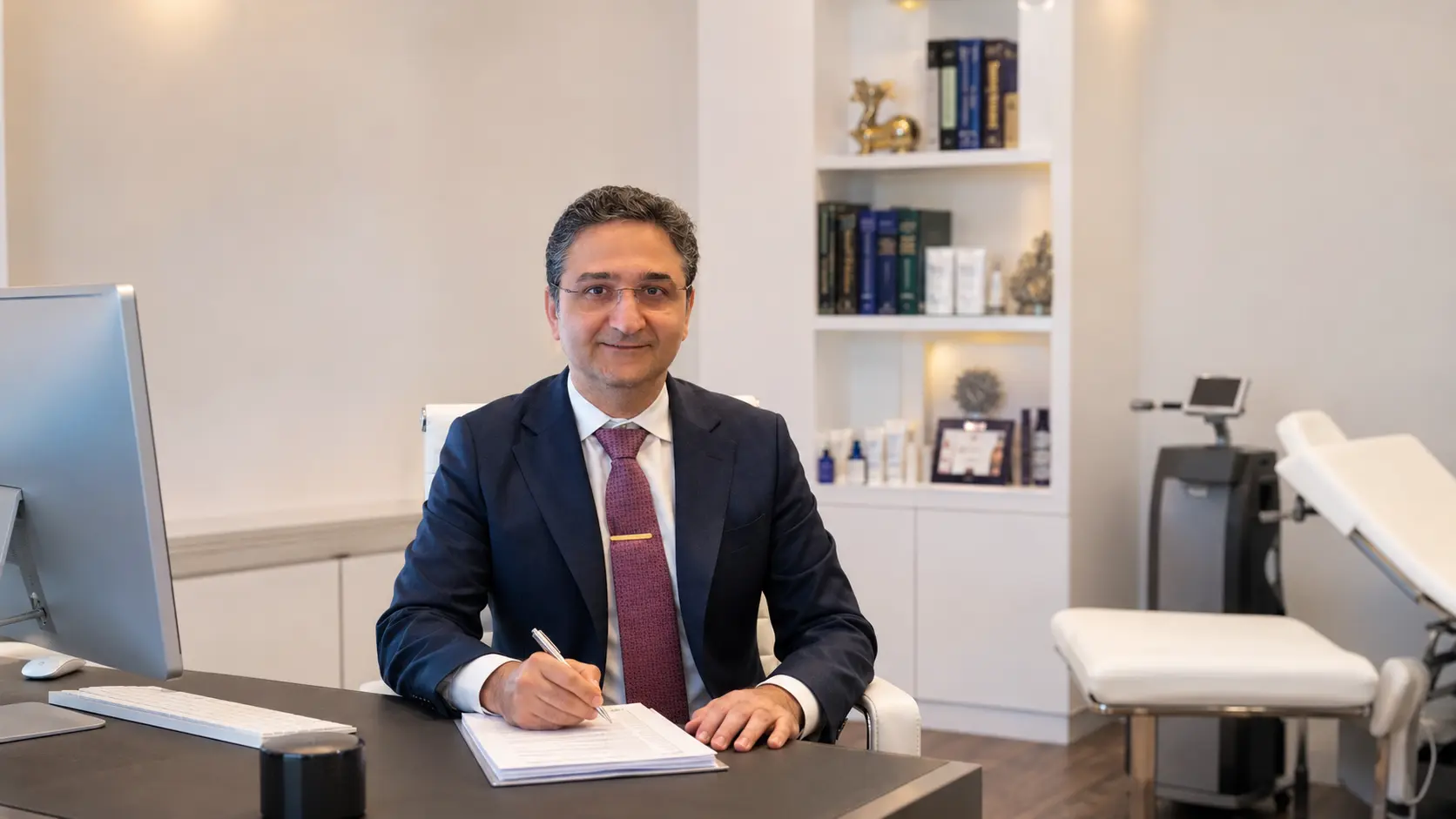
Reviewed by Dr Mohammad Ghazavi, Consultant Dermatologist. CQC-registered clinic
Private dermatology care in Maida Vale, London. Skin cancer awareness
Assessment for AK, SCC risk and broader sun damage. Central London access
Convenient for St John’s Wood, Paddington and West London.
What is actinic keratosis?
Actinic keratosis is a precancerous patch of sun-damaged skin. It often feels rough or sandpaper-like and commonly appears on the face, scalp, ears, forearms and hands. Most do not become cancer, but some can progress to squamous cell carcinoma, so diagnosis, treatment and sun protection are important.
Actinic keratosis at a glance
| What is Actinic keratosis? | Precancerous sun-damage lesions, also called solar keratoses, that feel rough or scaly on exposed skin. |
|---|---|
| Key signs of Actinic keratosis | Sandpaper-like texture, recurrent crusting, pink, red, tan or brown patches on the face, scalp, ears, hands or forearms. |
| Who gets Actinic keratosis? | More common in fair skin, age over 50, outdoor workers, outdoor sports, previous sunburn and immunosuppression. |
| Why Actinic keratosis matters | A proportion can progress to squamous cell carcinoma and it indicates cumulative UV damage. |
| Treatment options for Actinic keratosis | Cryotherapy, prescription field therapy, photodynamic therapy, laser resurfacing, curettage, biopsy or excision where needed. |
| Appointments | 7 days a week (subject to availability). |
Understanding actinic keratosis
Actinic keratosis is caused by long-term ultraviolet exposure. It develops when sun-damaged keratinocytes, the main cells in the outer skin layer, become abnormal and form rough scaly patches.
AKs are not invasive skin cancers, but they sit on a spectrum of sun damage and may progress in some cases. They are also a marker that the surrounding skin has received significant cumulative UV exposure.
What actinic keratosis looks and feels like
Texture
Many people feel AKs before they see them. They may feel like fine sandpaper or dry scale.
Colour
Lesions may be pink, red, tan, brown or skin-coloured with adherent scale or crust.
Behaviour
They may flake off and return, feel tender in sunlight or gradually become thicker.
Common locations
Forehead, temples, nose, ears, bald or shaved scalp, forearms, backs of hands and other sun-exposed areas.
Concerned about a rough sun-damaged patch?
A dermatologist-led assessment can confirm whether it is actinic keratosis and whether treatment, monitoring or biopsy is appropriate.
Diagnosis and when to seek assessment
Diagnosis is often made clinically by examining the lesion and surrounding skin. Dermoscopy can help distinguish actinic keratosis from eczema, psoriasis, seborrhoeic keratosis or superficial skin cancer.
Seek assessment if a rough patch persists beyond six weeks, becomes painful, bleeds, thickens quickly, ulcerates or looks different from your other lesions. If a lesion is unusually thick or suspicious, skin biopsy or diagnostic analysis may be recommended.
Actinic keratosis treatment options
Cryotherapy
Liquid nitrogen freezes abnormal cells. It is quick and often suitable for individual lesions.
Curettage, cautery or excision
Thicker or suspicious lesions may need removal under local anaesthetic, sometimes with histology.
Prescription field therapy
Medicated creams can treat visible and subclinical lesions across a sun-damaged area.
Photodynamic therapy
PDT uses a photosensitising cream and light activation to target atypical cells, often with good cosmetic outcomes on the face or scalp.
Laser resurfacing
Fractional or ablative laser resurfacing may be considered for selected sun-damaged skin to improve texture and support skin renewal.
Lesion-directed vs field-directed treatment
Lesion-directed treatments target individual visible patches. Field-directed treatments treat the wider sun-damaged area, including early changes that may not yet be visible.
Many patients benefit from a combination approach: clearing thicker or isolated lesions, then treating the broader field to reduce the chance of further lesions developing.
Aftercare and recovery
Healing
Redness, crusting or flaking may occur depending on the treatment used.
Gentle skincare
Cleanse gently, moisturise and avoid picking crusts or scales while healing.
Sun protection
Daily broad-spectrum SPF is essential during healing and long-term prevention.
Long-term skin health and prevention
Daily broad-spectrum SPF 30–50 is one of the most important steps to reduce new actinic keratoses and support lower skin cancer risk. Hats, UV-protective clothing, shade and avoiding sunbeds are also important.
Periodic skin checks are recommended for patients with multiple AKs, previous skin cancer, significant sun damage or immunosuppression.
Why choose Skinhorizon Clinic?
Consultant dermatologist-led care
We assess the lesion, the surrounding field of sun damage and your overall skin cancer risk before recommending treatment.
CQC-registered private clinic
Skinhorizon Clinic provides private dermatology care in Maida Vale, London, convenient for St John’s Wood, Paddington, West London and Central London.
Clear treatment pathways
Treatment may include lesion-directed therapy, field treatment, biopsy where needed and a prevention plan for future sun damage.
Your first visit — what to expect
Assessment
Review sun exposure, previous lesions and examine the affected area.
Dermoscopy
Assess visible lesions and the broader sun-damaged field.
Plan
Choose lesion-directed, field-directed or biopsy-based treatment where appropriate.
Prevention
Agree sun protection, skincare and follow-up intervals.
Frequently asked questions
Is actinic keratosis skin cancer?
Which actinic keratosis treatment is best?
How long does recovery take?
Can actinic keratosis disappear by itself?
Will I need maintenance after treatment?
Can actinic keratosis affect the scalp?
How can I reduce my skin cancer risk?
Protect your skin with expert AK care
Early assessment and treatment of actinic keratosis can support long-term skin health and reduce avoidable risk.
Skinhorizon Clinic, 4 Clarendon Terrace, Maida Vale, London W9 1BZ
Last reviewed: