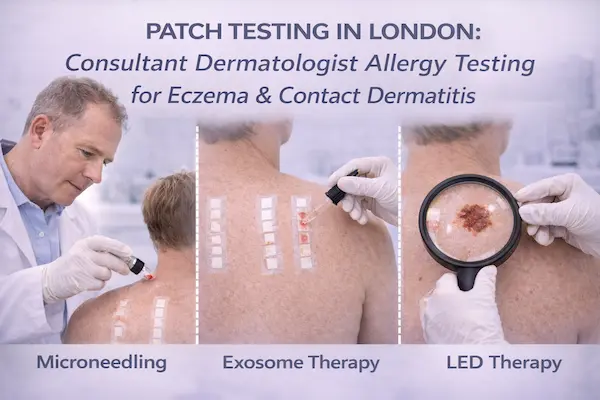
Patch Testing in London: Consultant Dermatologist Allergy Testing for Eczema & Contact Dermatitis
Persistent eczema that does not respond to creams is often not “just eczema.” In many adults, chronic or worsening dermatitis is triggered by allergic contact reactions to everyday substances — from skincare ingredients and hair dyes to metals, preservatives and workplace chemicals.
If you are searching for patch testing in London, the key question is not simply where to test — but whether the assessment is led by a consultant dermatologist who can interpret the results accurately and integrate them into a long-term treatment plan.
At-a-Glance: Patch Testing at Skinhorizon Clinic
- Consultant dermatologist-led assessment
- Comprehensive allergen panels
- Testing for cosmetic, occupational & fragrance allergens
- Accurate differentiation between allergic & irritant dermatitis
- Personalised avoidance and treatment plan
- Integrated eczema management strategy
What Is Patch Testing?
Patch testing is the gold standard diagnostic method for identifying allergic contact dermatitis. Unlike blood tests or skin prick testing (used for hay fever or food allergies), patch testing evaluates delayed hypersensitivity reactions that occur 24–96 hours after exposure.
It is particularly important in patients with:
- Eczema that is persistent or worsening
- Contact Dermatitis
- Facial or eyelid dermatitis
- Hand eczema
- Occupational rashes
- Unexplained chronic itching
At our London clinic, testing is performed using medical-grade allergen panels applied to the back and reviewed over multiple readings to ensure accuracy.
Allergic vs Irritant Contact Dermatitis: Why Diagnosis Matters
Not all dermatitis is allergic. Many cases are irritant in nature — caused by repeated exposure to water, detergents, solvents or friction.
A consultant dermatologist distinguishes between:
- True allergic contact dermatitis
- Irritant dermatitis
- Atopic eczema flares
- Seborrhoeic or rosacea-related inflammation
This distinction determines treatment strategy. For example, allergic contact dermatitis requires strict allergen avoidance, whereas irritant dermatitis may respond to barrier repair and topical therapy.
For patients with established eczema, integrated care via our Eczema Treatment pathway ensures both inflammation control and trigger identification.
What Conditions Often Require Patch Testing?
Patch testing is frequently recommended for patients with:
- Chronic hand eczema
- Persistent facial rash
- Seborrhoeic Dermatitis that does not respond to treatment
- Hair dye reactions
- Fragrance sensitivity
- Metal allergy (e.g., nickel)
- Recurrent eyelid dermatitis
Some patients referred for suspected Rosacea or steroid-resistant eczema are ultimately found to have allergic triggers driving inflammation.
How Patch Testing Works
Step 1: Initial Consultation
A detailed history is essential. We review skincare products, occupational exposures, hobbies, medications and previous treatments.
Step 2: Application of Allergen Panels
Small chambers containing allergens are applied to the upper back and secured with hypoallergenic tape.
Step 3: First Reading (48 Hours)
Patches are removed and initial reactions assessed.
Step 4: Final Reading (72–96 Hours)
Delayed reactions are evaluated. Interpretation requires specialist expertise — mild redness does not always equal allergy.
Testing is conducted within our regulated diagnostic environment using Medical Skin Allergy Testing protocols.
Struggling With Persistent Eczema?
Identify hidden allergens with consultant-led patch testing.
Book ConsultationCommon Allergens Identified in London Patients
In our London practice, frequently identified allergens include:
- Nickel and cobalt
- Fragrance mix I & II
- Preservatives such as methylisothiazolinone
- Hair dye component PPD
- Rubber accelerators
- Topical antibiotic ingredients
Urban exposure patterns mean cosmetic and occupational allergens are particularly common among professionals in healthcare, beauty, construction and cleaning industries.
Patch Testing for Facial & Eyelid Dermatitis
Eyelid skin is thin and highly reactive. Even minimal allergen exposure can cause chronic inflammation. Many patients treated repeatedly with steroid creams find recurrence occurs as soon as treatment stops.
Patch testing identifies hidden triggers such as:
- Nail polish resins
- Hair products
- Makeup preservatives
- Fragrance-containing moisturisers
Once identified, avoidance can dramatically reduce flare frequency and dependency on long-term steroid therapy.
Does Patch Testing Hurt?
Patch testing is non-invasive and generally painless. You may experience:
- Mild itching at reaction sites
- Temporary redness
- Rare blistering in strong positive reactions
Patients are advised to avoid sweating, heavy exercise and getting the back wet during the testing period.
Why Choose a Consultant Dermatologist for Patch Testing in London?
Patch testing is not just about applying allergens. Interpretation requires:
- Understanding of dermatological patterns
- Correlation with clinical history
- Differentiation between irritant and allergic reactions
- Creation of personalised allergen avoidance lists
Incorrect interpretation may lead to unnecessary product restrictions — or missed diagnosis.
At Skinhorizon Clinic, patch testing is integrated with our broader dermatology services including Skin Infection Treatment and complex inflammatory skin management.
Accurate Allergy Diagnosis Starts Here
Consultant-led patch testing with clear, actionable results.
Book ConsultationFrequently Asked Questions
How long does patch testing take?
The process takes 3–4 days with two to three clinic visits for accurate readings.
Can I shower during patch testing?
You should avoid getting the back wet until final readings are complete.
Is patch testing the same as a skin prick test?
No. Patch testing identifies delayed contact allergies, whereas skin prick testing evaluates immediate allergies such as pollen or food reactions.
Will I receive a list of safe products?
Yes. After diagnosis, we provide detailed avoidance guidance and safe product recommendations tailored to your allergen profile.
Disclaimer: This article is for educational purposes only and does not replace personalised medical consultation. Diagnosis and treatment plans depend on individual clinical assessment.