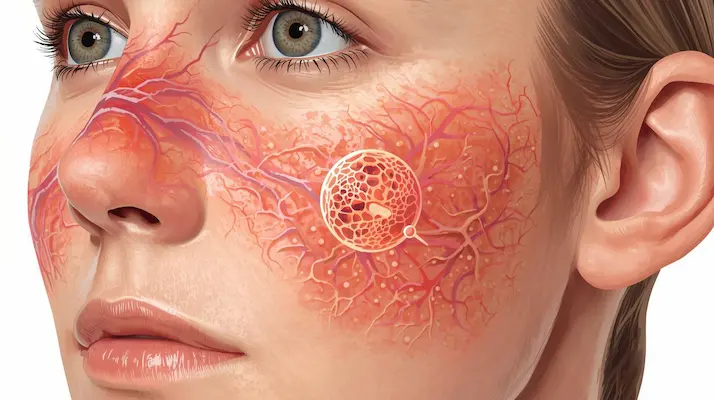
Rosacea Flare-Ups: What Triggers Them & How Dermatologists Control Redness Long-Term
At a Glance – How to Control Rosacea Redness Long-Term
Rosacea flare-ups can feel unpredictable: one day your skin is calm, the next you have flushing, burning, bumps or visible thread veins. The most effective plans combine trigger management, barrier repair, anti-inflammatory treatment and (when appropriate) vascular laser for persistent redness.
If you have rosacea, you already know the frustration: facial flushing that looks like sunburn, cheeks that sting with products that used to be fine, redness that lingers in photos, and flare-ups that seem to arrive at the worst possible time. Many patients also describe the emotional impact — the feeling that their skin is “angry” and unpredictable, especially in the London winter when indoor heating, cold wind and social events collide.
This article focuses on the most searched concerns: rosacea flare-up triggers, how dermatologists calm redness quickly, and what long-term control looks like. For a full clinical pathway (assessment, treatment planning, and in-clinic options), see our main Rosacea Treatment page. This blog is designed to support that page and send authority to it, not compete with it.
What is rosacea and why does it flare?
Rosacea is a chronic inflammatory skin condition that primarily affects the central face (cheeks, nose, chin and forehead). It is characterised by episodes of flushing and persistent redness, sometimes with bumps, sensitivity, burning and visible blood vessels.
Rosacea tends to flare because the skin’s neurovascular and immune responses are more reactive. In simple terms, triggers that may cause a mild blush in others can produce disproportionate flushing, inflammation and barrier disruption in rosacea-prone skin.
Rosacea is not caused by “poor hygiene” and it is not your fault. However, it does require a plan that addresses the drivers of reactivity and stabilises the skin over time.
Rosacea vs acne, seborrhoeic dermatitis and “sensitive skin”
Rosacea is commonly mislabelled as acne or simple sensitivity. Getting the diagnosis right matters, because the wrong routine can worsen flares.
- Acne tends to include comedones (blackheads/whiteheads) and may respond to stronger keratolytics — but those same ingredients can irritate rosacea. If you have mixed features, we may consider overlap with acne/folliculitis.
- Seborrhoeic dermatitis can cause redness and flaking around the nose and eyebrows; it may coexist with rosacea. See seborrhoeic dermatitis.
- Contact dermatitis (from skincare, fragrance, hair dye or “active” products) can mimic a rosacea flare. See contact dermatitis.
In clinic, we look for the pattern, the history, and your product tolerance. When useful, we document baseline redness and texture using digital skin analysis to monitor progress objectively.
Common rosacea flare-up triggers (and how to identify yours)
Triggers are individual, but rosacea tends to flare when the skin is exposed to heat, vascular stimulation, irritation or barrier disruption. Common triggers include:
- Heat and rapid temperature change: central heating, hot showers, saunas, winter wind.
- Sun/UV exposure: even on overcast days; cumulative exposure matters.
- Alcohol: particularly red wine and spirits in some patients.
- Spicy foods and hot drinks: heat + vascular stimulation can provoke flushing.
- Stress and poor sleep: neurovascular reactivity increases.
- Over-exfoliation: acids, scrubs, strong retinoids used too frequently.
- Skin barrier disruption: harsh cleansers, fragrance-heavy products, frequent “new product” testing.
- Exercise: especially hot yoga or poorly cooled workouts.
A practical approach is to keep a short trigger log for 2–3 weeks: note flushing episodes and what preceded them (heat, alcohol, a new product, a stressful day). The aim is not to eliminate life’s pleasures, but to understand your highest-impact triggers and build a realistic plan around them.
How dermatologists calm a rosacea flare-up fast
When your face is burning, bright red and reactive, the priority is to reduce inflammation and protect the barrier. Dermatologists typically use a “reset” strategy:
Step 1: Remove irritants and simplify
Stop all non-essential actives temporarily. During a flare, more products often means more inflammation. Keep to a gentle cleanser and bland moisturiser routine until stinging settles. If you suspect a reaction to a product, consider overlap with contact dermatitis.
Step 2: Cool the skin (without trauma)
Heat amplifies flushing. Use cool (not icy) compresses, avoid hot showers, and keep indoor environments cooler where possible. Avoid vigorous rubbing or “scrubbing” — friction can worsen redness.
Step 3: Use targeted anti-inflammatory treatment
Prescription or clinician-directed therapies can calm inflammation more effectively than “soothing” cosmetics alone. The best option depends on whether your flare is mainly vascular flushing, inflammatory bumps, or mixed.
Step 4: Protect against UV and visible triggers
UV commonly worsens rosacea. Even if your skin is reactive, pigment-safe and rosacea-appropriate protection remains important to prevent ongoing vascular stimulation.
Frequent Rosacea Flares or Persistent Redness?
A consultant-led plan can reduce flare frequency, calm sensitivity and improve long-term redness control with a structured pathway.
Redness + Visible Vessels (Thread Veins)?
When persistent facial redness and vessels drive symptoms, we may discuss vascular-focused pathways such as redness & vascular treatment and appropriate laser options.
Skincare for rosacea: what helps and what commonly worsens
Rosacea skincare is not about having the most products — it is about consistency and barrier support. In practice, what helps most patients is:
- Gentle cleansing: avoid foaming/stripping cleansers that leave skin “squeaky”.
- Barrier repair: prioritise moisturisers that reduce water loss and calm stinging.
- Predictability: introduce one product at a time; avoid frequent switching.
- Low-irritant routines: minimise fragrance and strong essential oils.
What commonly worsens rosacea includes:
- Overuse of exfoliating acids, scrubs and peels.
- Using “acne routines” aggressively when the real driver is inflammation/vascular reactivity.
- Harsh toners, alcohol-based products, or frequent cleansing.
- Heat-based tools and overly hot environments.
If your redness is accompanied by roughness, stinging and intermittent rash, we also consider overlap with dermatitis or dry skin patterns that require additional barrier strategy.
Long-term rosacea control: what a dermatologist plan actually looks like
Long-term control is usually achieved by combining several components, tailored to the rosacea subtype and your lifestyle. A robust plan often includes:
- Trigger strategy: manage the biggest triggers rather than trying to eliminate everything.
- Baseline anti-inflammatory therapy: reduce the underlying inflammatory drive.
- Barrier-first skincare: consistent routine to reduce reactivity.
- Vascular management: targeted treatment when persistent redness or vessels dominate.
- Monitoring: track progress so you can see what is working and avoid over-treating.
At Skinhorizon Clinic, many patients benefit from objective documentation through digital skin analysis to quantify redness, texture and tone over time. This helps keep decisions evidence-led rather than reactive during flares.
In-clinic options for persistent redness and flushing
Some patients do everything right with skincare and triggers but still have persistent redness, flushing or visible vessels. In those cases, dermatologists may consider in-clinic options as part of a wider plan.
Vascular and pigmentation laser (for redness/vessels)
When facial redness and visible vessels are central to the rosacea picture, vascular & pigmentation laser may be discussed. The aim is to reduce vascular prominence and background redness, which can also reduce the “reactive” look during minor triggers.
LED phototherapy (supportive, low downtime)
LED phototherapy can support barrier recovery and calm inflammatory activity in sensitive skin. While LED is not a substitute for medical therapy, it can be a useful adjunct during recovery phases or as part of a maintenance programme, particularly for patients who flare easily with stronger interventions.
Rosacea management is individual. A responsible plan avoids “chasing perfection” and instead aims for meaningful, stable improvement with minimal risk of irritation and rebound sensitivity.
Unsure If It’s Rosacea or Something Else?
Rosacea can overlap with seborrhoeic dermatitis or contact dermatitis. Accurate diagnosis changes treatment choices and reduces flare frequency.
Also Concerned About Texture, Pores or Tone?
Once rosacea is stable, we can safely discuss broader skin goals via skin texture, pores & tone pathways without destabilising sensitive skin.
When to seek help: red flags and common escalation points
Most rosacea can be managed safely with structured care, but you should consider prompt assessment if:
- Your redness is rapidly worsening or spreading beyond typical areas.
- You develop painful pustules, crusting, or signs of secondary skin infection.
- Your skin burns with almost any product, suggesting significant barrier compromise.
- You have persistent facial swelling or marked sensitivity affecting daily life.
- Your eye symptoms are significant (grittiness, irritation) alongside facial rosacea symptoms.
If your condition is impacting confidence and quality of life, that alone is a valid reason to seek specialist care. Rosacea is not “cosmetic only” — it is a medical inflammatory disorder with a real symptom burden.
FAQs – Rosacea Flare-Ups, Triggers & Redness Control
What triggers rosacea flare-ups most commonly?
Common triggers include heat and rapid temperature change, sun exposure, alcohol, spicy foods, stress, hot drinks, and skincare irritation (especially over-exfoliation). Triggers vary between individuals, so a short trigger log can help identify your highest-impact factors.
How do I calm a rosacea flare quickly?
Dermatologists typically recommend simplifying your routine, stopping irritant actives temporarily, cooling the skin gently, protecting the barrier, and using targeted anti-inflammatory treatment appropriate to your subtype. Avoid scrubbing, hot showers and frequent product changes during a flare.
Is rosacea permanent?
Rosacea is usually chronic, but it is very treatable. Many patients achieve long periods of stability with fewer flares and significantly reduced redness. Long-term control generally requires a maintenance routine and trigger strategy rather than a single one-off treatment.
Can lasers help rosacea redness?
In selected patients, vascular-focused laser treatment can reduce persistent redness and visible vessels. It should be used as part of a wider rosacea plan that includes barrier support and trigger control to minimise relapse and sensitivity.
How do I know if it’s rosacea or acne?
Rosacea often features flushing, persistent central facial redness and sensitivity, whereas acne commonly includes comedones (blackheads/whiteheads). Some people have overlap. If “acne routines” worsen burning and redness, rosacea or dermatitis overlap should be considered by a clinician.